
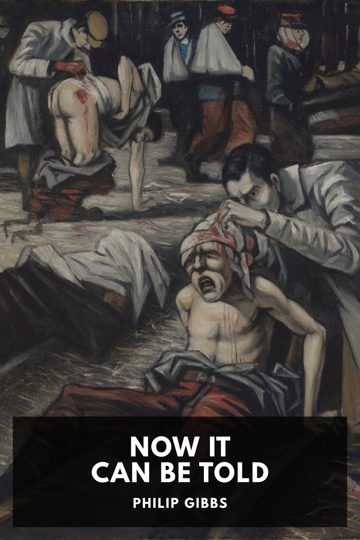
Now It Can Be Told
First published 1920 Reading time about 12 hours
At the outbreak of war in 1914, newspaper reporter Philip Gibbs left for Belgium to report on the German invasion and the resulting mass Allied retreat. In the midst of these catastrophes in the early days of fighting, British high command was loath to allow any reporting outside army communiqués, and only after a public outcry for information was Gibbs made into one of only five official British war correspondents. He would accompany the British army through all their fighting on the Western Front, including the Battles of Ypres, the Somme, and Flanders, up till their eventual victory in 1918. As a war correspondent, Gibbs had the fairly unique position of being able to interact with both the soldiers in the trenches and the generals in high command. In return for this privileged access, all of the correspondents’ original reports were subject to strict censorship, and Gibbs chafed constantly under the censor’s pen. Published in 1920 after the war, this book contains his unvarnished accounts of the brutality of modern trench warfare and the British General Headquarters who struggled to adapt to it.
- World War, 1914-1918
- World War, 1914-1918 · Great Britain
Read it on Firelit Reader
With explanations of any passage, a built-in dictionary and notes that open in place. Join the waitlist and we'll write once when Firelit Reader is available.