
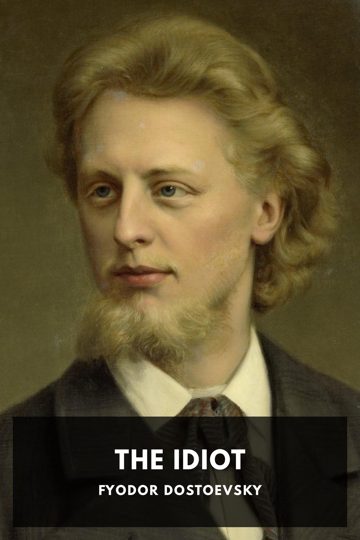
The Idiot
First published 1915 Reading time about 16 hours
Acclaimed by the 20th-century Russian critic Mikhail Bakhtin for its “polyphony” (a literary concept introduced by Bakhtin to describe a plurality of voices within a narrative), The Idiot is regarded by modern critics as one of Dostoevsky’s most experimental and artistically uneven novels. The novel follows the entrance of the epileptic Prince Muishkin—a character Dostoevsky meant to represent a “positively good and beautiful man”—into a circle of Russian high society characterized by vanity, greed, and social ambition. Thanks to his epileptic condition and his simplicity, earnestness, and kindness of heart, Muishkin is frequently branded by his newfound social circle as the titular “idiot”; but in reality, he’s a man of extraordinary sensitivity and insight. His arrival in society sets off a series of dramatic events and interpersonal strife centered around himself and his distant relations. The Idiot drew upon many of Dostoevsky’s significant personal experiences, such as his Russian Orthodox faith, his experience of nearly being executed in 1849, and his own struggle with epilepsy, all of which inform his depiction of Prince Muishkin’s distinctive psychology.
- Historical fiction
- Russia · Social conditions · 1801-1917 · Fiction
Read it on Firelit Reader
With explanations of any passage, a built-in dictionary and notes that open in place. Join the waitlist and we'll write once when Firelit Reader is available.