
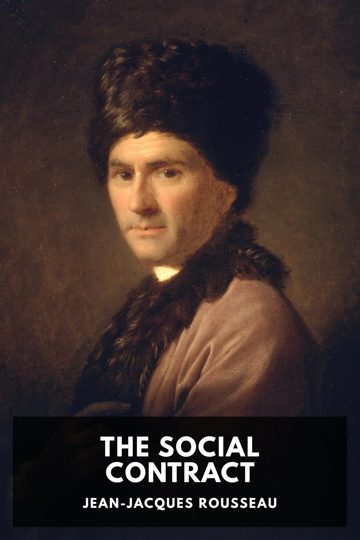
The Social Contract
First published 1913 Reading time about 4 hours
In The Social Contract, Jean-Jacques Rousseau presents a political philosophy based on the principle that legitimate authority originates from the consent of the people. Individuals willingly surrender their rights in order to create a collective sovereign, which embodies the general will of the people. Rousseau examines different forms of government, addresses the challenges of ensuring that a government executes the general will of the people, and addresses the need for safeguards against the abuse of power. He demonstrates that active citizenship and a strong social compact are crucial for maintaining a just and free society.
- Economics
- Political science · Early works to 1800
- Social contract
Read it on Firelit Reader
With explanations of any passage, a built-in dictionary and notes that open in place. Join the waitlist and we'll write once when Firelit Reader is available.